

Why it matters when choosing your running shoes
When you’re choosing running shoes, one of the most useful things to understand is your gait.
You’ll often hear terms like gait analysis or pronation, but in simple terms, this just means:
How your foot moves when it hits the ground and pushes off again.
It’s not complicated, and you don’t need a lab test to get a basic understanding — but knowing your pattern can help you choose more comfortable, better-fitting shoes.
What Is Gait Analysis in Running?
Gait analysis looks at how you run. It’s a simple way of assessing how your foot moves when you run, particularly how it lands, rolls, and pushes off the ground. It’s commonly used to help runners choose the right type of shoe based on their movement pattern.
Most running shops offer a simple version where they film you running on a treadmill for a few seconds and show you how your feet land and move.

From a runner’s perspective, it helps answer questions like:
- Does my foot roll in too much?
- Does it stay on the outside?
- Am I landing evenly?
This is where pronation comes in.
What Pronation Actually Means
Pronation is the natural inward rolling of the foot during running that helps absorb impact.
It’s a natural movement. Your body uses it to absorb impact and distribute force as you run.
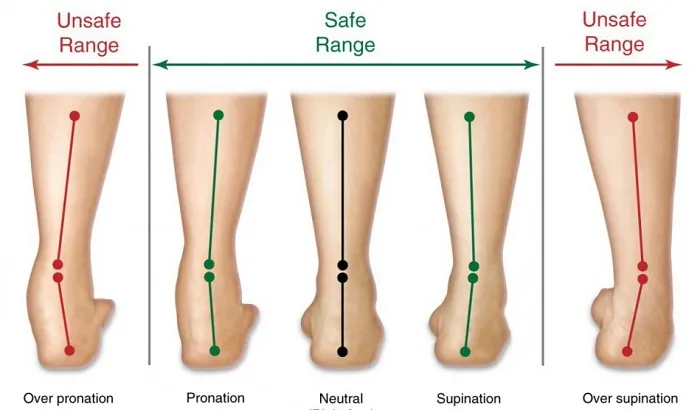
Everyone pronates to some degree. The question is how much.
Types Of Pronation Explained
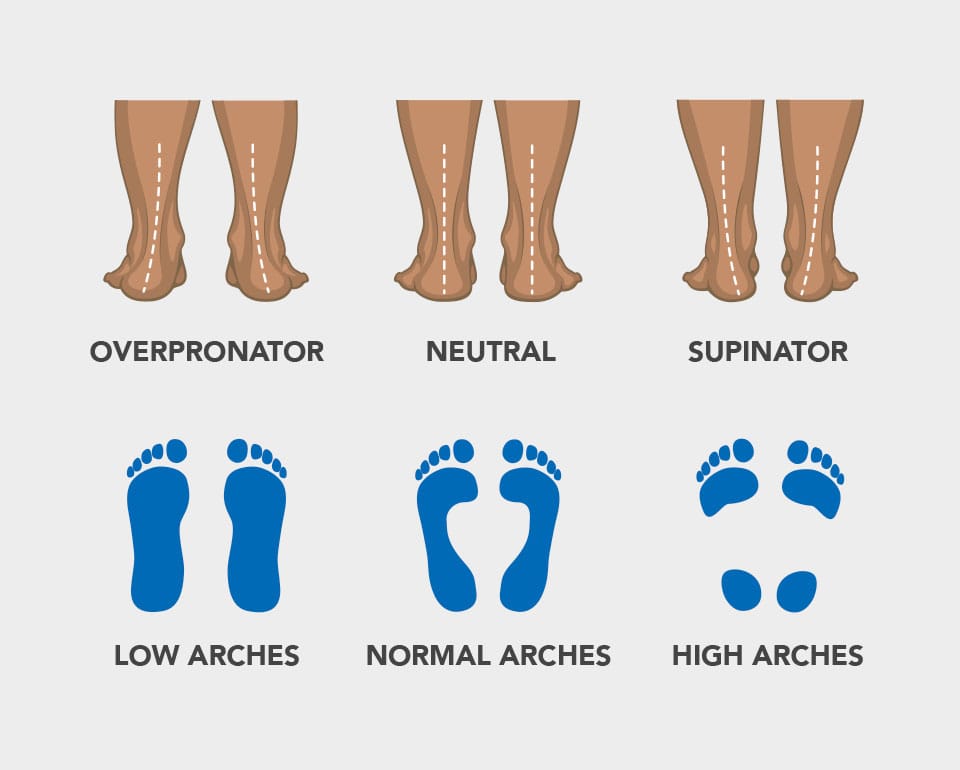
There are three main patterns
Neutral Pronation
Neutral pronation is when the foot lands outside of the heel and then rolls naturally inward, keeping ankles aligned. Weight is distributed evenly across the ball of your foot as you push off.
This is considered the most efficient pattern.
Shoe guidance:
Most neutral running shoes will work well.
Overpronation
Overpronation is when the feet roll inward too much, requiring a more sturdy running shoe to keep the foot in place. Weight shifts toward the inside edge instead of staying centered. It’s very common, especially in people with lower arches or flat feet.
Shoes with stability features — firmer material on the inside edge — can help slow down that inward roll and reduce strain on your ankles and knees.
Shoe guidance:
Look for stability shoes with extra support on the inner side to help control the movement.
Underpronation (Supination)
Your foot doesn’t roll inward enough. Weight stays on the outer edge throughout your stride. Often happens with high arches.
Because your foot isn’t absorbing shock efficiently, neutral shoes with extra cushioning work better.
Shoe guidance:
Choose well-cushioned neutral shoes to help absorb impact.
How foot shape (arches) relates to gait
Your arch height can influence how your foot moves when you run.
- Lower arches are often linked with more inward rolling (overpronation)
- Higher arches are often linked with less inward movement (underpronation)
This isn’t a strict rule, but it can help explain why different runners need different types of shoes or support.
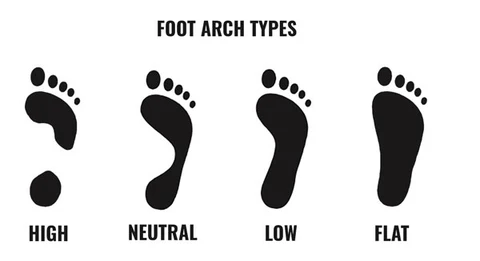
Insoles can help highlight pressure zones and how your foot loads during movement.
Using Insoles for Additional Support
If you’ve identified your gait pattern but your shoes alone aren’t providing enough support, insoles (also called orthotics) can be helpful for some runners.
Insoles work by:
- Supporting your arch to reduce collapse
- Stabilising your heel with a deep heel cup
- Distributing pressure more evenly across your foot
For overpronation:
Look for insoles with firm arch support and a deep heel cup. These help control the inward roll without completely restricting natural movement.
Many runners find insoles helpful when:
- Their feet feel tired or achy after runs
- They’re using neutral shoes but need a bit more support
- They want to extend the life of their running shoes
Custom vs over-the-counter insoles:
Over-the-counter insoles from running shops work well for most runners. They’re affordable (typically £15-40) and available in different arch heights.
Custom orthotics from a podiatrist are more expensive (£150+) but may be worth considering if you have ongoing pain or complex foot issues.
Important: Insoles shouldn’t feel uncomfortable or force your foot into an unnatural position. If they do, they’re not right for you.
How to Get an Idea of Your Gait
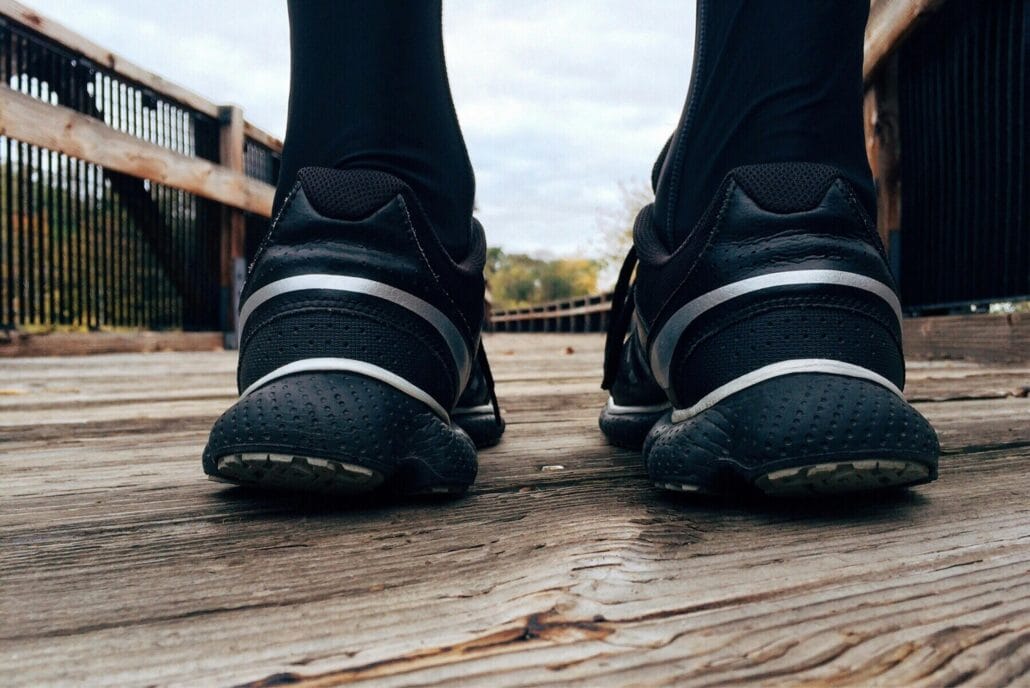
The simplest way is to look at your worn running shoes.
Wear on the inner edge (especially near the big toe):
Likely overpronation.
Even wear across heel and forefoot:
Likely neutral pronation.
Wear on the outer edge:
Likely underpronation.
Many running shops also offer free gait analysis — they film you running on a treadmill for 10-15 seconds and talk you through what they see.
Does Gait Analysis Really Matter?
Yes – but not in an overly complicated way.
Understanding your gait can help you:
- Choose more comfortable shoes
- Reduce unnecessary strain
- Avoid obvious mismatches (like using stability shoes when you don’t need them)
However, it’s not the only factor.
Most importantly:
If a shoe feels comfortable and you’re running without pain, that’s the best indicator.
Pronation is helpful information, not a strict rule.
Comfort still comes first
How This Links to Choosing Running Shoes
When selecting your running shoes, gait analysis is just one piece of the puzzle.
You also need to consider:
- The surface you run on
- Cushioning preferences
- Fit and foot shape
Common mistakes runners make with gait analysis
- Overthinking pronation too much
- Choosing shoes based only on labels (stability vs neutral)
- Ignoring comfort
- Assuming gait alone determines injury risk
Final Thought
Gait analysis isn’t about overcomplicating your running.
It’s simply a tool to help you understand your body a bit better — so you can choose shoes that work with you, not against you.
Frequently Asked Questions
How do I tell if I overpronate or underpronate?
A quick way to get an idea is by looking at the wear on your running shoes.
- Wear on the inner edge (especially near the big toe) usually means overpronation
- Wear on the outer edge suggests underpronation
- Even wear across the sole points to a neutral gait
You can also try a simple “wet foot test” or get a quick gait analysis at a running shop.
Can I check my running gait at home?
Yes – you can get a surprisingly good idea at home with a few simple checks:
- Shoe wear test: Look at old trainers for wear patterns
- Wet foot test: Step on paper with a wet foot to see your arch shape
- Video analysis: Film yourself running from behind or the side
These won’t be perfect, but they give a good starting point.
How do you fix overpronation?
You don’t need to completely fix overpronation, but you can manage it if it’s causing discomfort:
- Wear stability running shoes
- Use supportive insoles if recommended
- Strengthen feet, ankles, and hips
- Improve overall running strength and control
For most runners, simple shoe choice and strength work are enough.
Is it worth getting a gait analysis?
For most runners, yes – especially if you’re new or unsure what shoes to choose.
Many running shops offer free gait analysis, and it can help you understand your foot movement and find a more suitable shoe.
How much does gait analysis cost in the UK?
In many cases, it’s free when you buy running shoes from a specialist shop.
If you don’t purchase, it typically costs around £15–£20, while more detailed clinical assessments can cost significantly more.
Is pronation good or bad for running?
Pronation is a normal and necessary part of running. It helps your body absorb impact when your foot lands.
Some amount of inward movement is expected, and most runners will pronate to some degree.
Problems can arise when the movement is excessive or poorly controlled, especially when combined with factors like muscle weakness, fatigue, or sudden increases in training load.
In practice, comfort, appropriate footwear, and gradual training tend to matter more than focusing on pronation alone.
What shoes should I wear for my gait type?
- Overpronation → stability shoes
- Neutral → neutral cushioned shoes
- Underpronation → cushioned neutral shoes
Comfort and fit still matter more than categories.
Does gait analysis matter for trail running?
Somewhat.
Pronation patterns are most relevant on consistent surfaces — roads, tarmac, smooth paths.
On technical trails with roots, rocks, mud, and uneven ground, your foot is constantly adjusting. Your gait pattern changes with every step.
So grip, protection, and stability on uneven terrain matter more than pronation control.
That said:
– If you overpronate significantly, some stability features can still help on longer forest paths or gravel sections
– If you underpronate, extra cushioning helps on rough ground where your foot isn’t absorbing shock well
It’s useful information, but not the deciding factor.
These are general guidelines – if you’re dealing with persistent pain or injuries, it’s worth getting advice from a specialist.