
Most people don’t start by asking about compass features.
They start by looking at 10 different compasses and thinking –
I have no idea where to begin.
We see this all the time at events. Someone walks over, looks at the display, picks up a few compasses, puts them back down, and then asks:
“Which one should I get?”
And honestly, that’s a hard question to answer without knowing how they actually run.
So the first question we usually ask is simple:
Are you walking, jogging, or racing?
Because that changes everything.
Before You Choose a Compass — This Matters More
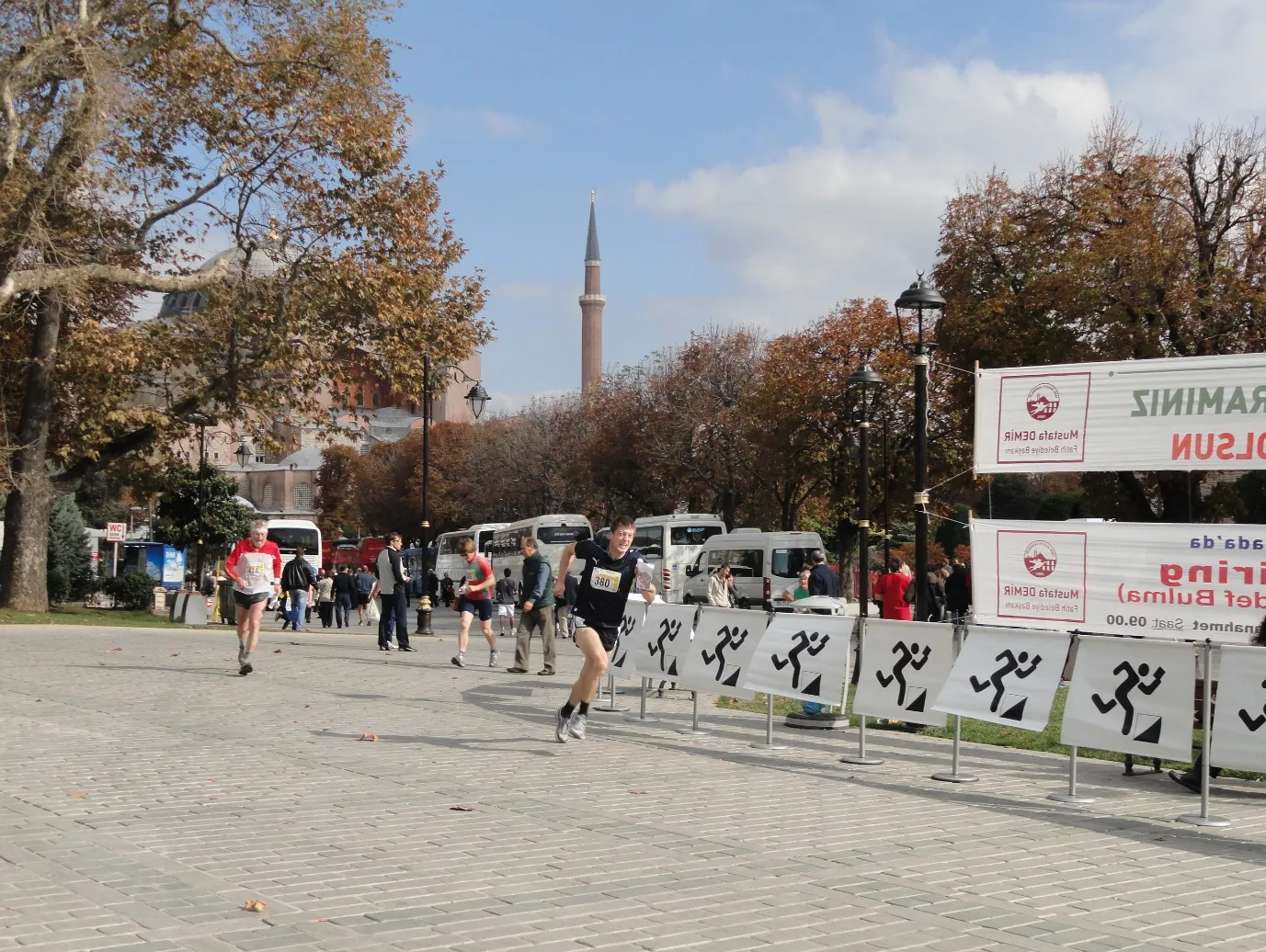
If you’re moving slowly — stopping to think, working out where you are, checking the map carefully — a simple compass works fine.
You’ve got time to read it. The needle doesn’t need to settle instantly.
But if you’re running, glancing at the map while moving, trying to keep your pace — then a faster needle starts to matter.
Not because it’s “better.”
Because it needs to keep up with what you’re doing.
This is probably the most important thing to understand before you even look at different types.
The compass needs to match your speed.
Not your ambition. Not what elite runners use.
Your actual speed right now.
Do You Need a Compass at This Level?
Yes.
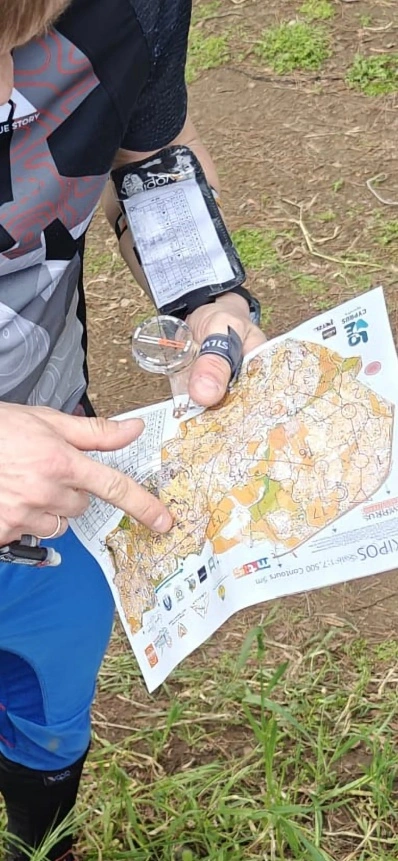
If you’re navigating a course with a map in your hand, you need a compass.
We’re not talking about permanent courses where you just follow paths.
We mean proper orienteering — reading the map, choosing routes, and staying on direction.
Even on beginner courses, a compass helps.
Not for taking precise bearings at first — but for keeping the map facing the right way.
Most of the time, especially early on, you’re using it to keep direction rather than measure exact angles.
That alone makes everything clearer.
Why People Get Stuck Choosing
Here’s what usually happens.
You look online or stand in front of a display and see:
- 10+ different models
- Different shapes
- Left hand, right hand
- Letters and numbers that don’t mean much
- No clear idea how it even sits on your hand
And nobody explains the basics.
Like — how is this thing actually used?
That’s the bit most guides skip.
How a Compass Is Actually Used
This is crucial.
In orienteering, the compass and map work together.
You don’t use them separately.
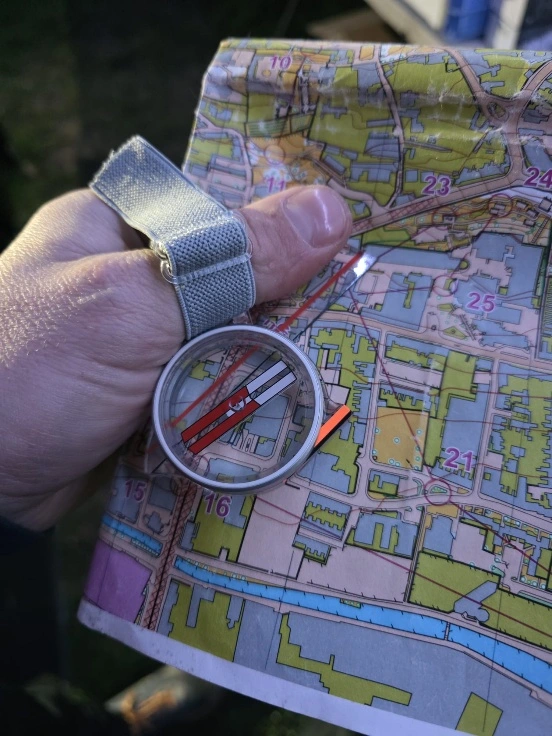
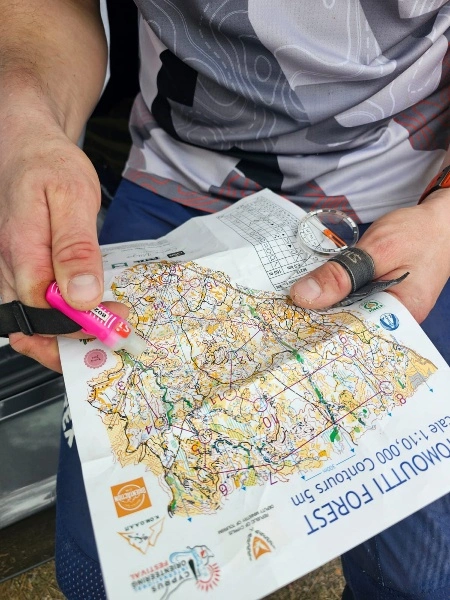
With a thumb compass, it sits on your thumb – on the same hand that holds the map.
So your thumb (with the compass attached) rests on the map, and you see both at once.
That’s it.
Your other hand usually holds your SI card (dibber) for punching controls — and helps with balance, climbing, or moving through terrain.
Left or Right Thumb — How to Choose
This confuses a lot of people.
But it’s actually straightforward.
The compass goes on whichever hand holds the map.
For many right-handed runners, that’s the left hand.
But not always.
Some people prefer the opposite.
The only way to know is to think about – or try – holding a map while moving.
Which hand feels natural?
That’s your compass hand.
Don’t overthink it.
Two Types — But Explained Simply
There are two main types of compasses you’ll see.
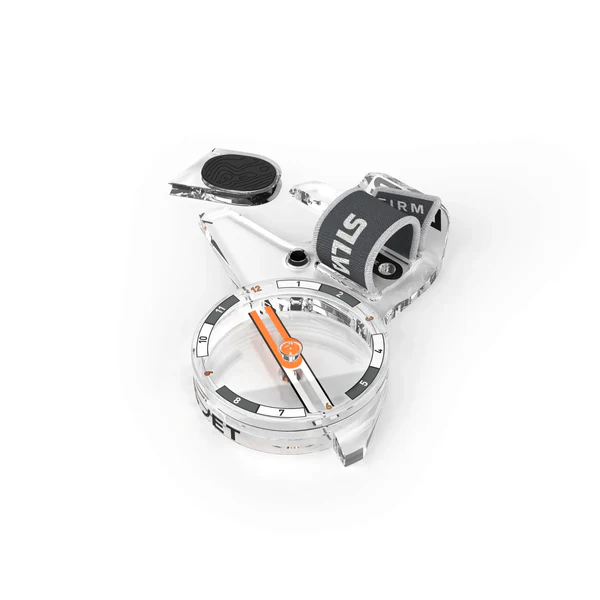
Thumb Compass
This is what most people use once they start running regularly.
It sits on your thumb with an elastic strap.
The compass and map stay together in one hand – no switching, no repositioning.
Once you’re used to it, it’s quick and natural.
Rom always used a thumb compass. At racing speed, everything needs to stay in one place. Holding a separate compass just adds an extra step.
That said, it can feel strange at first if you’ve never used one.
If you think a thumb compass suits the way you run, browse our full thumb compass range to compare different models and needle speeds.
Baseplate Compass
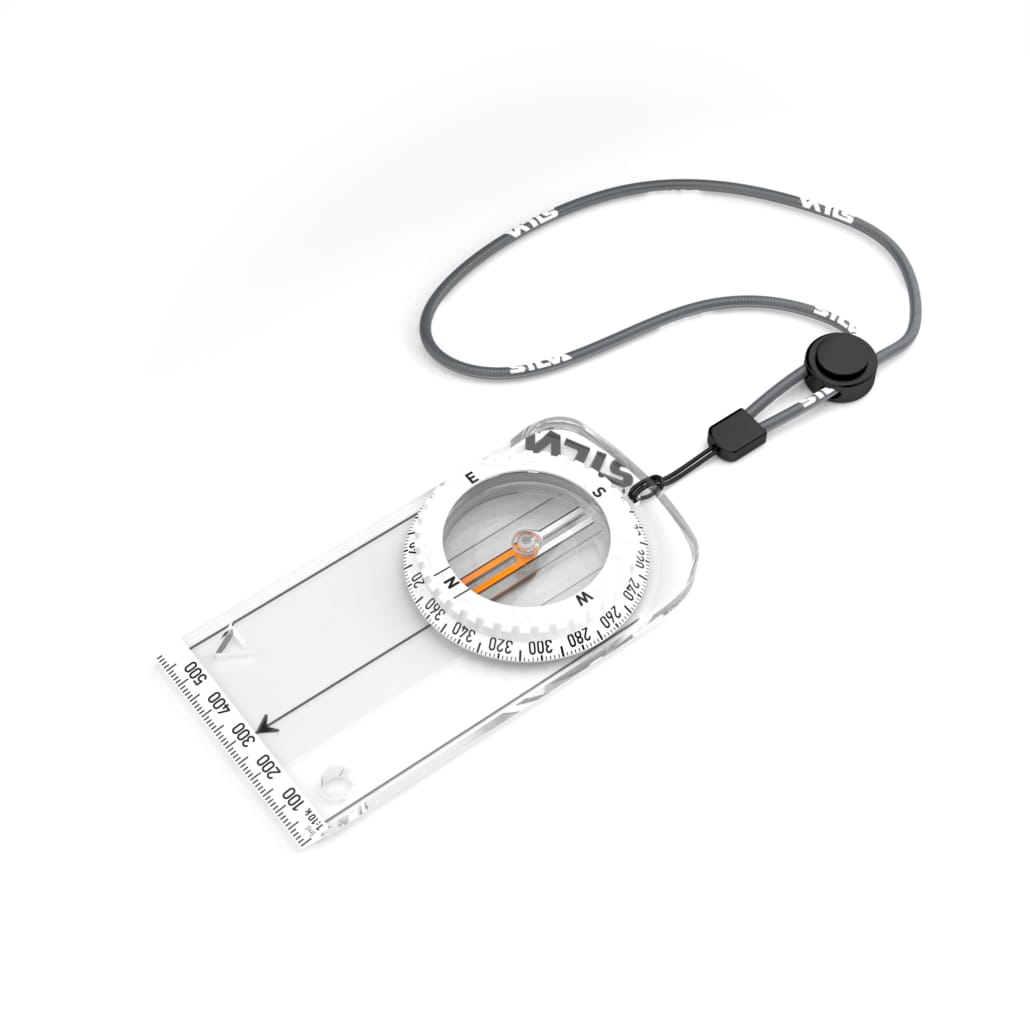
This is the type most people recognise.
A flat compass with a clear rectangular base.
You place it on the map when you need it, take a bearing, then carry it separately.
Some people prefer this when starting out.
It’s familiar, especially if you’ve used a compass before outside orienteering.
And it can feel easier to understand.
If you prefer a more traditional compass, see our baseplate compass range.
Neither is “better.”
Thumb compasses are common in UK orienteering because they’re efficient once you’re comfortable.
But plenty of people use baseplates and navigate perfectly well.
It comes down to what works for you.
What Features Actually Matter
Let’s keep this simple.
Only a few things really affect your decision.
Needle Speed
This is how quickly the needle settles and points north.
Racing compasses settle quickly — so when you glance down, the needle is already stable.
You don’t have to wait for it.
A slow needle means you pause and wait.
A fast needle means you glance and keep moving.
If you’re moving fast, that matters.
If you’re stopping to check the map, it matters much less.
Rotating Bezel (360 Degrees)
Some compasses have a rotating dial. Some don’t.
This lets you take precise bearings.
When you’re starting, you often won’t use it much.
But as you progress, it becomes more useful — especially off-trail.
So it’s worth understanding, even if it’s not essential at the beginning.

Scales
Most compasses have measurement scales.
These match common UK map scales like 1:10,000 or 1:15,000.
They help estimate distance.
Useful — but not something to worry about too much at the start.

The Spectra Dial
Some compasses have coloured markings on the dial instead of just numbers.
The idea is to make direction quicker to recognise at a glance.
Some runners like it, especially at speed.
Others find it distracting at first.
It’s a preference — not something you need to get right immediately.
Choosing Based on How You Run
Forget labels like “beginner” or “advanced.”
Think about how you actually move.
If You’re Just Starting
You’re moving slower. Thinking more. Stopping to check.
A simple compass is enough.
Thumb or baseplate — whichever feels more natural in your hand.
You don’t need fast needle speed or extra features yet.
Focus on learning how to use it.
You don’t need to spend much — basic compasses are usually in the £15–30 range.
If You’re Running Regularly
Now you’re moving more confidently.
You’re reading the map on the move.
A faster needle starts to help.
If you’re using a baseplate and constantly repositioning it, a thumb compass may feel easier.
If your compass feels slow when you glance at it, that’s a sign to upgrade.
Mid-range compasses usually sit around £30-55.
If You’re Racing
Now everything happens at speed.
You’re not stopping.
You need a compass that responds instantly when you look at it.
A thumb compass becomes much more useful here.
At this level, you’ll notice the difference in needle speed.
Racing compasses are usually £60+.
Common Mistakes
These come up all the time.
Buying What a Friend Uses
Your friend might run completely differently.
What works for them might not work for you.
Advice is useful — but try to understand your own needs.
Choosing the Wrong Hand
This happens more often than you’d think.
Someone buys a left-hand compass, then realises they naturally hold the map in the right hand.
Think about this before buying.
Focusing Only on Price
The cheapest option might work.
But if the needle is slow or hard to read, it becomes frustrating.
You don’t need to overspend — but a small step up in quality often makes a big difference.
When to Upgrade
You’ll usually start to notice when it’s time.
For example:
- Your compass feels slow while running
- You’re starting to race and need quicker response
- You want everything in one hand
- Your current compass is worn or damaged
If it still works for how you run, keep it.
If it starts holding you back, that’s your moment.
Final Thought
A compass won’t make you a better orienteer on its own.
But the right one makes everything simpler.
It should match how you run now.
Not how you think you should run.
Not what elite runners use.
How you actually move through the forest.
Start there — and you’ll know when it’s time to change.
Find Your Orienteering Compass
Whether you’re buying your first compass or upgrading to a fast-needle racing model, choosing the right compass can make navigation easier and more enjoyable. Browse our full range of orienteering compasses to find the best option for your experience level and running style.
Frequently Asked Questions
Do beginners need a compass for orienteering?
Yes — if you’re navigating with a map.
At the beginning, you won’t use it for precise bearings.
But it helps keep the map facing the right way, which makes everything easier to understand.
Is a more expensive compass worth it?
Only if it matches how you run.
If you’re moving slowly and learning, a basic compass is enough.
Faster, more advanced compasses make a difference when you’re running and need quick readings without stopping.
Do you need to take bearings in orienteering?
Not at the start.
Most beginners use a compass to keep direction and orient the map.
Taking precise bearings becomes more useful as you move into more technical terrain.
How do I know if my compass is working properly?
A good compass should:
- Settle quickly when you stop moving
- Point consistently in the same direction
- Move freely without sticking
If the needle feels slow, unstable, or inconsistent, it may be time to replace it.
Can a compass go wrong?
Yes — especially if it’s damaged or exposed to strong magnetic fields.
If the needle behaves strangely or points the wrong way, it’s not reliable anymore.
(We’ll cover this in more detail separately.)
Should I choose thumb or baseplate as a beginner?
Both can work.
Thumb compasses are more common once you start running regularly.
Baseplate compasses can feel more familiar if you’ve used a compass before.
The best choice is the one that feels natural in your hand.