
What makes a running sock comfortable?
I always say the same thing when someone asks me about socks: a good sock is one you forget you’re wearing. It stays where you put it, it doesn’t rub, and it doesn’t turn into a cold, wet weight inside your shoe halfway round.
Material plays a part in that, but it’s not the whole story. Fit matters. How the sock’s built matters — where the seams sit, how snug it is round the heel. I’ve had people blame the fibre for something that was actually just the wrong size sock.
That said, when people ask me about moisture wicking running socks, they usually mean one thing: sweaty feet that rub and slide inside the shoe. So let’s start there.
What are merino and synthetic running socks?
Merino wool comes from Merino sheep — it’s much finer than the wool in an old jumper, which is why it doesn’t feel scratchy against the skin. What I notice wearing merino running socks is that they hold a bit of moisture without ever feeling properly wet, and they don’t build up smell the way some fabrics do over a long day out.
Synthetic socks are usually nylon (polyamide) or polyester, often with a bit of elastane mixed in for stretch. Rather than holding onto sweat, these fibres move it out to the surface of the sock so it can evaporate. That’s usually why a thin synthetic sock feels quick to dry.
Most of what’s on the shelves these days blends the two. You’ll see “merino blend” on a label — that just means merino combined with something synthetic for strength and stretch. The merino percentage varies a lot, anywhere from around a fifth of the sock up to most of it, so it’s worth having a proper look at what’s actually in the sock rather than assuming “merino” on the label means it’s mostly wool.
Merino vs synthetic: how do they compare?
Here’s roughly how I’d talk you through it if you were stood at the shop asking.
| What matters to you | What I’d tell you |
|---|---|
| Sweaty feet | Both manage moisture, just differently. Wool tends to hold a little without feeling too wet; synthetic running socks are knitted to move moisture towards the outer surface, where it has a chance to evaporate. How damp either feels comes down to the specific sock and how hard you’re working, not just the fibre. |
| Drying after a soaking | Thin synthetic usually dries quicker once it’s properly wet through. Thickness matters as much as fibre — a thick sock of either material takes longer than a thin one. |
| Cold, wet conditions | Merino usually has the edge here, because it stays comfortable even once it’s picked up some moisture. |
| Warm conditions | Don’t assume wool means winter-only. Lightweight merino exists, and so do thin, breathable synthetics built for hot days. |
| Odour after wear | In my experience, merino holds up better over a long day without smelling as much as most synthetics. |
| Durability | Comes down to reinforcement and how well the sock’s knitted, in either fibre. Don’t judge by fibre content alone. Reinforcement at the heel and toe is worth checking, since those areas often see a lot of wear. |
General tendencies from what I’ve seen over the years, not a promise about every pair — a thick sock behaves differently from a thin one, even in the same fibre.
What does moisture wicking actually mean?
It gets used a lot, so it’s worth being clear on what it actually means. It’s just how well a fabric moves sweat away from your skin so it doesn’t sit there as a wet patch. That moisture then spreads through the sock or evaporates, depending on the fabric and the conditions.
It doesn’t mean your feet stay bone dry. On a hot day you’ll out-sweat any sock. On a wet trail, water gets in over the top of your shoe and no ordinary sock is stopping that. The better question isn’t “is it moisture wicking” — it’s how the sock feels once it’s damp, and how it behaves as you keep moving.
Breathable running socks help, but so does the shoe. A light sock has limited chance to dry out if it’s sat inside a shoe that traps water.
Which sock works for your kind of run?
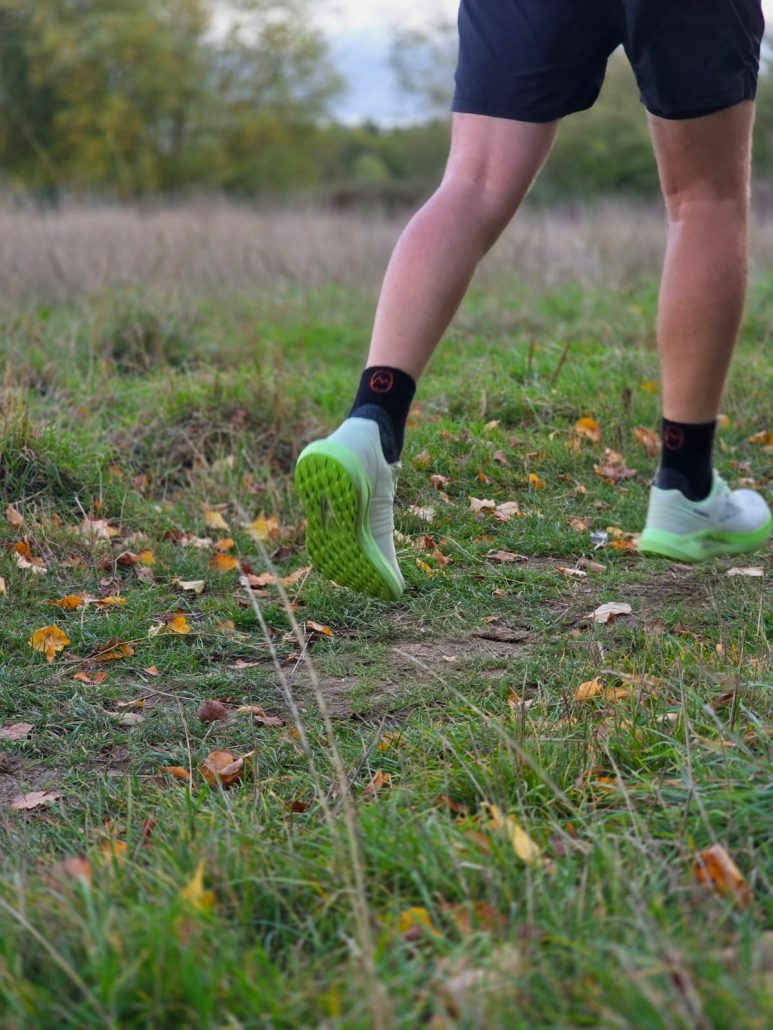
Warm road runs: a thin, breathable sock — merino or synthetic — that dries quickly. You want airflow, not insulation.
Cold runs: merino tends to earn its keep here for me. It keeps working even once it’s picked up some moisture, which matters on a long, cold run where your feet are damp for hours, not minutes. For the rest of your winter kit, see what to wear running in cold weather.
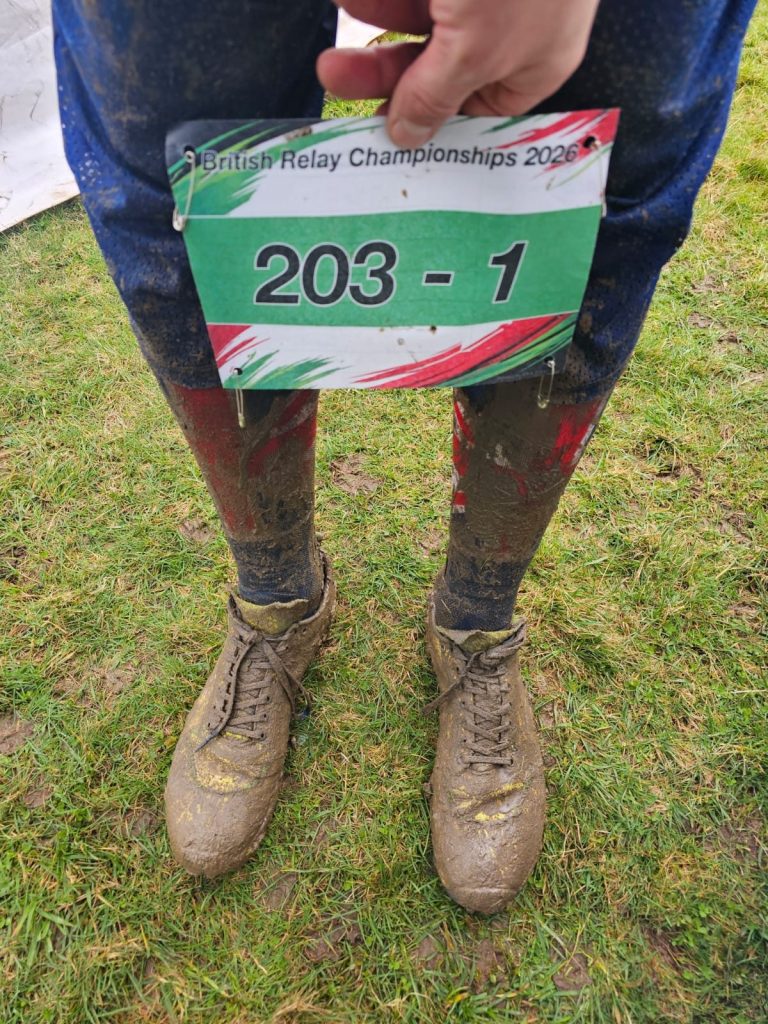
Wet trail runs: your feet are getting wet no matter what you’re wearing — streams, mud, wet grass. Orienteering’s a good example: you’re often off-path through undergrowth and standing water for an hour or more without a dry moment. In that kind of running, I lean towards merino trail running socks because the wool keeps some insulating quality even wet. Some runners prefer a thin synthetic instead, because it drains and dries sooner once you’re back on drier ground. Both are reasonable choices — it depends how long you’re out and how cold it is.
Longer runs: durability and steady comfort matter more than speed of drying. A well-built merino blend tends to stay comfortable for hours without much fuss, which is part of why you see it recommended a lot for ultras.
Can either material stop blisters or slipping?
No, not on its own. Fibre affects moisture, and moisture’s one part of the blister picture, but fit and construction are just as important. We’ve covered the rest in our guide on how to prevent blisters when running.
This is where seamless running socks come in. A smooth, flat toe seam reduces one common friction point right at the toes, where a lot of blisters start. Add a secure fit through the arch and heel, and the right thickness for your shoe, and you’ve dealt with most of what actually causes rubbing. If you still get rubbing, double-layer socks are another option worth knowing about.
If your sock bunches under your foot or slides down inside your heel while you run, that’s very rarely a fibre problem. It’s almost always fit — the sock’s the wrong volume for your foot, or the wrong length for your shoe. Our guide to running sock heights helps with the length part.
What about grip and non-slip socks?
Grip socks for running and non slip running socks are a different feature altogether, and it’s worth keeping that separate in your head from moisture-wicking. Grip usually comes from a textured print or band, often round the ankle or across the sole, that stops the sock itself moving inside the shoe. It’s about the sock staying put, not about managing sweat.
You can get a grippy sock in either merino or synthetic — the anti slip feature and the fibre content are two separate decisions, not the same thing.
How to choose your next pair
A short list, roughly in the order I’d think about it myself:
- What conditions do you mostly run in — dry road, cold miles, or wet, off-path terrain?
- Do your feet run hot and sweaty, or do you get cold feet even on a moderate run?
- What thickness do you actually like underfoot — thin and minimal, or a bit of cushioning?
- How much room does your usual shoe give you? A thicker sock in a snug shoe changes the fit more than people expect.
- Is there reinforcement at the heel and toe? That’s the biggest single factor in how long a sock lasts — durable running socks are usually about construction as much as fibre.
- Does the sock actually stay where you put it, or does it need constant readjusting?
None of these has one right answer for everybody. It comes down to your feet and your usual conditions.
So, merino or synthetic?
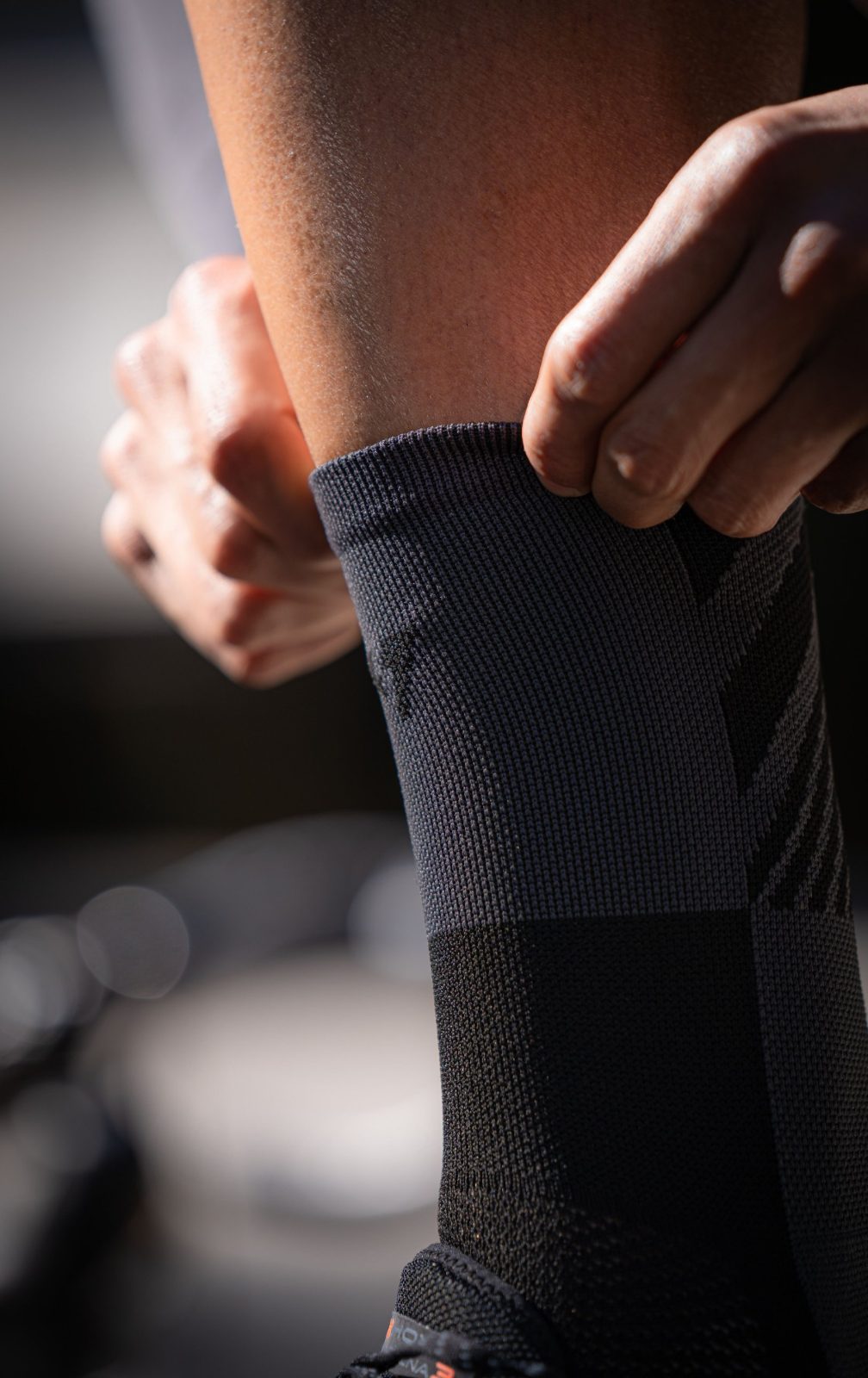
There’s no single correct answer. Merino generally has the edge on odour and comfort in cold, damp conditions. Synthetic often wins on drying speed. Both depend heavily on how the sock’s actually built, and fit matters as much as fibre — sometimes more.
If you’re trying something new, don’t save it for race day. Wear it on a run you already know well, so you’re judging the sock and not the route.
A few quick questions I get asked
Are merino socks too warm for summer?
Not necessarily. Merino running socks come in lightweight builds too — thickness and ventilation make more difference than the word “wool” on its own.
Do synthetic socks dry faster than merino?
Usually, once properly soaked, especially if they’re thin. Compare socks of a similar thickness though — a heavy synthetic sock can take longer to dry than a very light merino one.
Which is best for sweaty feet?
There’s no single best fibre for everyone. Look for something breathable that fits closely without bunching, then see how it feels on your usual run.
Will merino stop blisters?
No. It might feel more comfortable to some people when damp, but blisters still happen. If you get regular rubbing, look at fit and seams before you look at fibre.
Are grip socks the same as moisture wicking socks?
No. Grip is about the sock staying put in the shoe. Moisture wicking is about managing sweat. A sock can do one, both, or neither.
👉 Have a look at our running socks — merino options from brands such as INOV8 and Moggans, alongside synthetic socks for warm days and wet trails.