

Introduction
Buying your first orienteering compass is easy. Learning how to use it confidently takes a little more practice.
The good news is that it’s much simpler than many beginners expect.
You don’t need to understand advanced navigation or master complicated techniques before your first event. In fact, most experienced orienteers use the same basic skills over and over again. The difference is that years of practice have made those skills almost automatic.
If you’ve ever looked at your map, glanced at your compass and wondered, “Am I doing this properly?” you’re not alone. Almost everyone feels like that when they start.
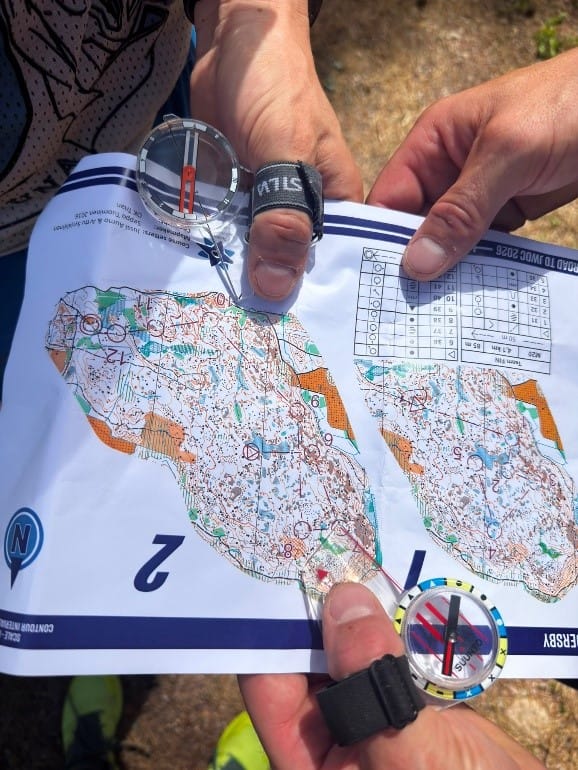
This guide explains the basics in plain English. We’ll show you how your compass works, how to use it together with your map and how to build confidence every time you head into the forest.
Whether you’re preparing for your first local event or you’ve already completed a few courses, these simple techniques will help you navigate with more confidence.
Already looking for your first compass? Read our guide on choosing an orienteering compass before you continue. Once you’ve chosen the right compass, this guide will show you how to use it confidently.
Who is this guide for?
This guide is for anyone who has recently started orienteering or wants to feel more confident using a compass.
Whether you’ve borrowed a compass at your first event, bought your own, or simply want to improve your navigation skills, these simple techniques will help you build confidence one step at a time.
What You'll Learn
By the end of this guide, you’ll know how to:
- understand what your compass is telling you
- hold it correctly
- keep your map facing the right direction
- use your compass while moving
- follow a bearing when needed
- avoid common beginner mistakes.
Before You Start
Your compass has one simple job.
It always points towards magnetic north.
That’s all it does—but it’s incredibly useful.
Your map tells you where you are and where you want to go. Your compass helps you make sure you’re travelling in the right direction.
It’s also worth remembering that orienteering maps are drawn to a scale. Every centimetre on the map represents a much greater distance on the ground. As you gain experience, you’ll naturally start using the map, the compass and the map scale together to judge both direction and distance.
Don’t worry about getting everything right immediately. Every experienced orienteer started by learning these same basics.
🧭 Compass Point Tip
If you’re just starting out, don’t think of your compass as something that tells you where to go. Think of it as something that helps you stay on the direction you’ve already chosen from your map.
Step 1 – Get Comfortable with Your Compass
Before your next event, spend a few minutes simply getting familiar with your compass.
Watch what happens when you slowly turn around.
No matter which way you face, the needle always settles and points north.
This is the foundation of everything you’ll learn.
Most orienteering compasses have:
- a magnetic needle
- a clear compass housing
- direction markings
- either a thumb plate or a baseplate.
You don’t need to remember every part today. The important thing is becoming comfortable holding it and trusting the needle.
🏃 Rom’s Tip
Before your first event, stand outside your house and slowly turn around with your compass. Watch how the needle always finds north. It’s a simple exercise, but it helps build confidence before you even step into the forest.
Step 2 – Hold Your Compass Properly
If you’re using a thumb compass, wear it on the thumb of the hand holding your map. It’s designed so you can read both at the same time without swapping them between your hands.
Keep the compass as level as possible.
If it’s tilted too much, the needle won’t move freely and may not settle properly.
Don’t worry about holding it perfectly. After a few events it will start to feel natural.
⚠️ Common Beginner Mistake
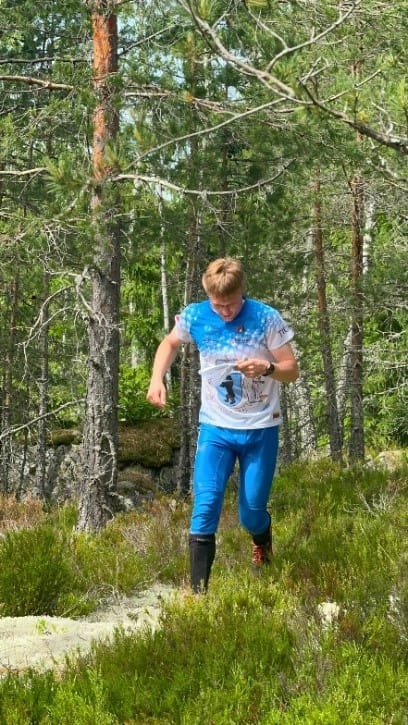
Holding the compass at a steep angle. A tilted compass can make the needle stick or move slowly, making it harder to read accurately.
Step 3 – Turn Your Map
This is one of the first skills every beginner should learn.
As you move through the terrain, turn your map so that north on the map matches north on your compass.
When you do this, the features on the map will be facing the same way as the features around you.
Suddenly the woodland starts to make much more sense.
You’ll notice experienced orienteers constantly turning their maps as they run. It’s a habit that soon becomes automatic.
🧭 Compass Point Tip
If the map doesn’t seem to match what you’re seeing around you, don’t assume you’re lost straight away. Stop for a moment and check that you’ve turned the map correctly. Quite often that’s all it takes.
Step 4 – Start Looking Around You
One of the easiest mistakes to make is spending too much time looking down.
Your compass is only one part of navigation.
The real information is all around you.
As you move, compare what you can see with what’s printed on the map.
Can you see the path? The stream? The hill? The large boulder?
The more often you compare the map with the terrain, the more confident you’ll become.
🏃 Rom’s Tip
I spend far more time looking at the terrain than looking at my compass. The compass is a quick check to confirm my direction, then my attention goes straight back to reading the map and what’s around me.
Step 5 – Following a Direction
Once you’ve decided which way you want to travel, use your compass to make sure you’re heading in the correct direction.
Rather than looking down every few seconds, choose a clear feature in the distance that lies on your route. It might be a distinctive tree, a large rock or the edge of a clearing.
Walk or run towards that feature.
When you reach it, check your map and compass again before continuing.
Breaking your route into smaller sections is much easier than trying to think about the whole journey at once.
Step 6 – Taking a Bearing
As your confidence grows, you’ll begin using bearings more often.
A bearing helps you travel accurately in one chosen direction, particularly across open ground or in areas where there are very few obvious features.
Don’t feel you need to master bearings on your first event.
Many beginners complete several local events simply by keeping their map orientated, checking their direction regularly and matching the terrain to the map.
Taking accurate bearings is another skill that develops naturally with practice.
Step 7 – What If Things Don't Look Right?
Every orienteer gets confused sometimes.
It doesn’t matter whether you’ve been orienteering for one month or twenty years.
The important thing is not to rush.
Stop.
Take a breath.
Turn your map so it matches the direction you’re facing.
Look for obvious features like paths, streams, fences or hills.
Once you’ve worked out where you are, you can confidently continue.
🏃 Rom’s Tip
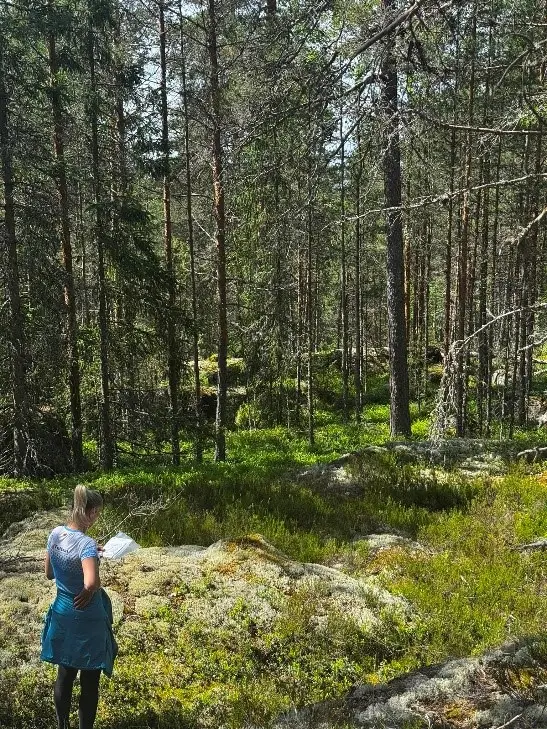
If something doesn’t feel right, stop straight away. Spending ten seconds checking your map is much quicker than running another two hundred metres in the wrong direction.
Practise Before Your Next Event
You don’t need a competition to improve your compass skills.
Try these simple exercises.
- Stand in your garden and find north.
- Turn your map to match the direction you’re facing.
- Visit a local park and practise keeping your map orientated as you walk.
- Choose a tree in the distance and walk towards it while keeping your direction.
Every small practice session builds confidence.
Common Beginner Mistakes
- Holding the compass at an angle.
- Forgetting to turn the map.
- Looking at the compass too often.
- Ignoring the features around you.
- Rushing after making a mistake.
- Losing confidence too quickly.
Remember, every experienced orienteer has made these mistakes at some point.
Frequently Asked Questions
Do I need a compass for every event?
Some beginner courses can be completed with very little compass use, but learning to use one from the start will help you build good navigation habits.
How often should I check my compass?
Only as often as you need to confirm your direction. Spend more time reading your map and the terrain than staring at the compass.
Do I need to use a bearing all the time?
No. Many legs can be navigated by keeping your map orientated and using obvious features. Bearings become more useful on longer or more technical sections of a course.
Why does my compass seem wrong?
In most cases the compass is correct. If something doesn’t make sense, first check that you’ve turned your map correctly and that you’re comparing it with the terrain around you.
Final Thoughts
Learning to use an orienteering compass isn’t about becoming perfect after one event.
It’s about building confidence one course at a time.
The more you practise, the less you’ll think about holding your compass or turning your map. Those skills gradually become automatic, leaving you free to enjoy the challenge of finding controls and making good route choices.
Don’t worry about making mistakes. Every experienced orienteer has been exactly where you are today.
Take your time, trust the process and enjoy learning one of the most rewarding skills in orienteering.