
Running sock heights sound straightforward until you start comparing different brands.
You might come across names such as no-show, invisible, ankle, quarter, mini crew, micro crew, crew, shorty or knee-high when you’re looking for running socks. Some brands use several of these terms, while others have their own names for similar heights.
Most runners will have come across at least some of these names when choosing running socks, but it isn’t always obvious what they actually mean or where each sock is supposed to sit on your leg.
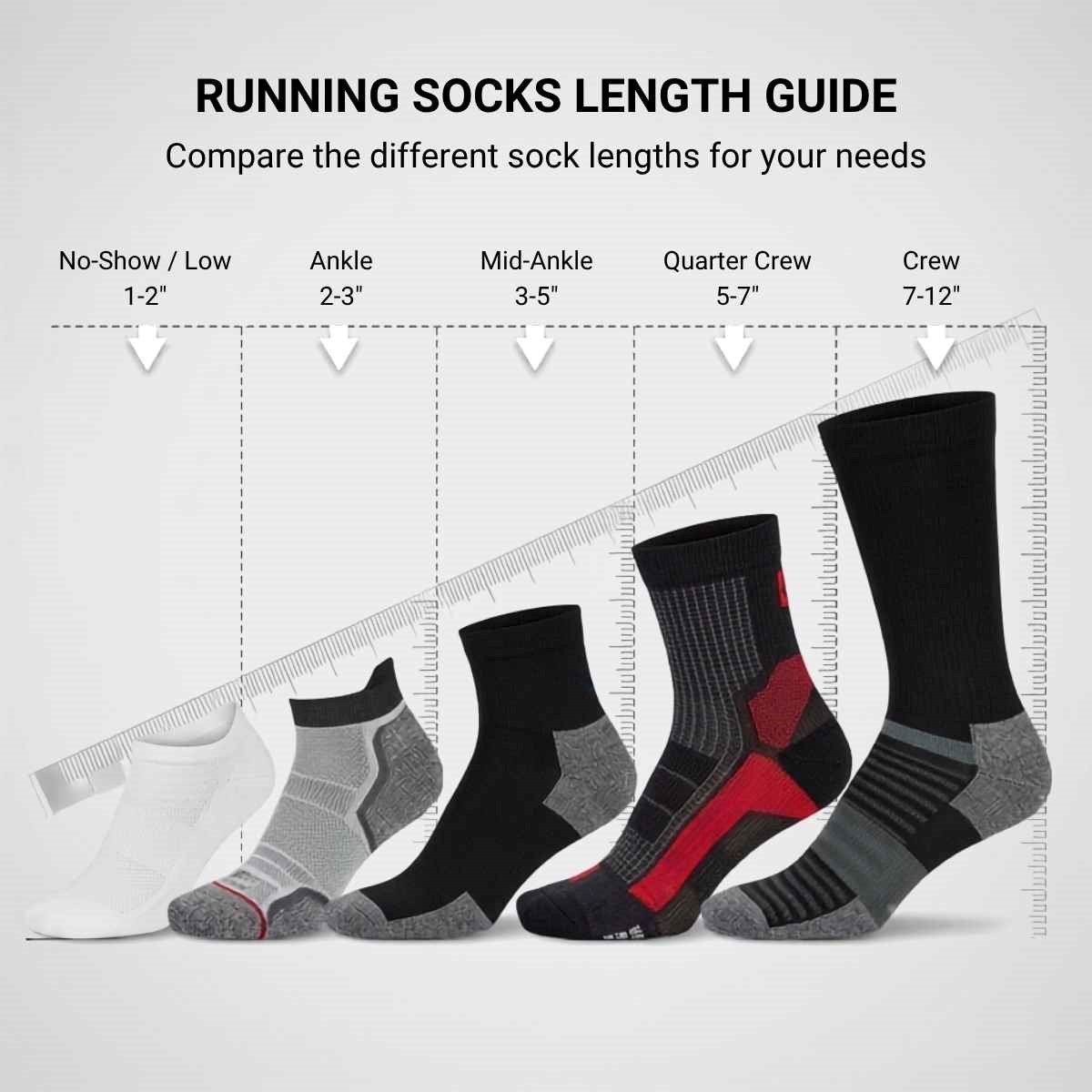
There isn’t one universal system for naming running sock heights. Different brands use their own descriptions and height categories, so a “quarter”, “mini crew” or “crew” sock may not sit in exactly the same place on the leg from one brand to another. On top of that, brands like naming their own tiers.
It’s not you missing something — it’s just genuinely inconsistent out there. So rather than trying to memorise every brand’s own naming system, it’s easier to understand what each height actually does for you when you’re running, and match that to your conditions. That’s the approach I’ll take here.
No-Show running socks
Sits below the ankle bone, hidden completely inside your shoe. It’s the lowest profile you can get and the coolest option in warm weather, since there’s barely any fabric on your foot at all.
The trade-off is protection. Nothing covers your ankle, so there’s nothing between your skin and the shoe collar rubbing directly against it. Depending on the design and fit, some no-show socks can work their way down into the heel during a run, which then causes exactly the rubbing you were trying to avoid in the first place. If you’re going this route, look for one built with a heel grip or anchor, rather than a plain low-cut sock that relies on a snug fit alone.
Good for: short easy runs, gym sessions, warm weather, low-cut trainers.
Ankle running socks
Sits right at, or just above, the ankle bone. A small step up from no-show — enough to cover the bone itself, while staying light and low profile.
Good for: shorter runs, cycling, gym training, casual wear in mild weather.
Quarter running socks (sometimes called Mini Crew)
This is the height that causes most of the naming confusion, because “quarter” isn’t pinned to one fixed spot the way you’d hope. Broadly, it sits somewhere between the ankle and the calf — higher than an ankle sock, shorter than a full crew.
For running, this middle height earns its place. It sits high enough to give you more coverage around the ankle and lower leg without the extra height of a full crew sock. If you find crew socks too warm or bulky but ankle socks leave you with a sore patch at the back of your heel, quarter height is usually the answer.
Good for: regular training runs, cycling, court sports, anyone who wants more coverage without going full length.
Crew running socks
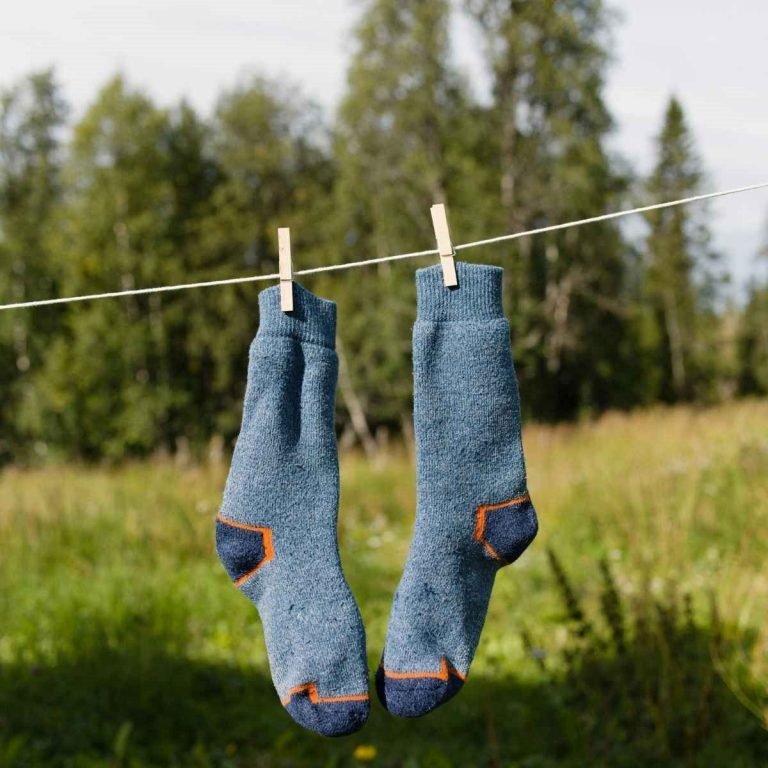
Rises higher up the lower leg, generally towards the mid-calf. It gives more ankle and lower-leg coverage than an ankle or quarter sock, which can be particularly useful on rougher ground. Full ankle coverage, enough fabric for proper cushioning and arch support, and enough length to actually do something useful on rougher ground.
For UK trail running specifically, crew height earns its keep more than it does on the road. It gives some protection against brush, nettles and low scratchy undergrowth on narrower forest paths, and it stops grit and small stones working their way in over the top of your shoe — which happens constantly once you’re off tarmac and onto anything resembling a proper trail. If you’ve read our piece on trail shoes for UK forest and mud, you’ll know the ground rarely stays predictable for long. Crew height socks are one of the simpler ways to deal with that without changing anything else about your setup.
Good for: trail running, longer distances, colder training, most general use.
Knee-High / Calf Length running socks
The tallest option, sitting just below the knee. In running, knee-high socks are often associated with compression, although not every knee-high running sock is a compression sock.
They are commonly used for longer efforts, race days or recovery, depending on the sock and the runner’s preference..
Good for: long-distance race day, recovery, standing for long periods.
Where Do O-Socks Fit In?
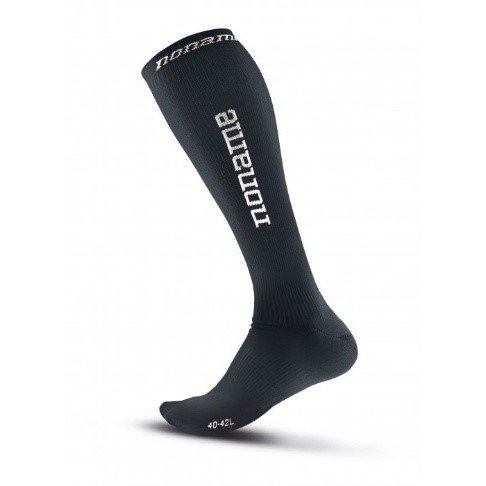
Orienteering socks (called O-socks) don’t really sit inside this running-sock naming system at all, and that’s worth explaining properly because it trips people up.
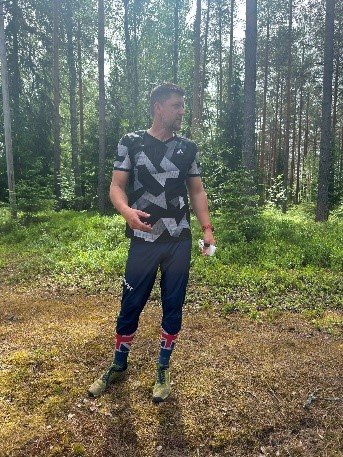
O-socks are long — well past crew height — with a tight, snug fit and strong elasticity, built to be worn under short orienteering trousers or 3/4 tights. They’re made with a reinforced double front to survive bramble, gorse and repeated contact with undergrowth that a normal running sock was never asked to deal with. The fit is closer and more supportive than a typical crew sock, partly because the terrain demands it, and partly because there’s no shoe collar doing any of the supporting work — the sock itself has to manage that on its own.
So if you’re weighing up a “trail crew” sock against O-socks, it isn’t really a height comparison. They’re built for different jobs.
Step 5 – Make Sure It Fits Properly
- Short, easy road or gym session – no-show or ankle
- Regular training runs – quarter
- Trail running, longer distances, colder months – crew
- Long race day or recovery – knee-high compression (specialist brand)
- Off-trail forest, orienteering courses – O-socks, a different category entirely
None of this is a hard rule. Some runners prefer a quarter sock even on trail because they don’t get on with the extra fabric of a crew, and that’s completely fine. The height is about managing friction, debris and temperature — not about doing it “properly.”
Frequently Asked Questions
Are quarter socks and mini crew socks the same?
Not necessarily. Brands use these terms differently, so it’s worth checking the actual height shown by the manufacturer rather than assuming they’re identical.
Why do different brands have different sock heights?
There isn’t one universal system for naming sock heights. Brands may measure or describe their heights differently, and some use their own names, such as mini crew or quarter crew, alongside the more common terms.
Are crew running socks better for trail running?
They can be a useful choice because they give more ankle and lower-leg coverage, particularly on rough or overgrown trails. But they aren’t automatically better for every runner — some prefer a shorter sock and don’t need the extra coverage.
Can I wear no-show socks for trail running?
Yes. There’s nothing inherently wrong with wearing no-show socks on a trail. Your choice depends on the shoe, terrain, weather and how much coverage you prefer. For exposed or overgrown trails, a higher sock simply gives you more protection.
Does sock height affect running performance?
Sock height itself is unlikely to make you a faster runner. Its value is more practical — it affects comfort, coverage, temperature and how well the sock works with your shoes and the terrain.
How high should running socks be?
There’s no single correct height. Choose the lowest height that gives you the coverage and comfort you want for the conditions. No-show and ankle socks suit runners who prefer minimal coverage, while quarter and crew socks give progressively more. Knee-high socks are another option, particularly for compression and recovery.
Final Thoughts
Choosing running socks shouldn’t require learning a different vocabulary for every brand.
The names can be confusing, but the basic idea is simple. No-show and ankle socks give you minimal coverage. Quarter socks sit a little higher, while crew socks cover more of the lower leg. Knee-high socks take the coverage further and are particularly common in compression and recovery socks.
For trail running, a crew sock can give you useful extra coverage. For a warm road run, you may prefer something much lower. And if you’re buying socks from different brands, always check where the cuff actually sits rather than relying on the name alone.
There isn’t one sock height that every runner should wear.
Choose the height that works with your shoes, your route, the weather and, most importantly, what feels comfortable on your own legs.