

Metal Studs or Rubber – What Actually Works Where?
This is probably the question we get asked the most:
Should I go for metal studs or rubber?
And the honest answer is — it depends on the ground you’re running on.
Not the brand.
Not what your friend wears.
Not what the marketing says.
The ground.
So let’s break it down properly.
First Question: What Terrain Are You Actually Running?
Before thinking about shoes, you should ask yourself:
- Is this proper off-trail forest?
- Is it mixed trail with some paths?
- Is it rocky fell?
- Is it sprint in a park or urban area?
A lot of confusion comes from mixing these up.
A shoe that feels great on mixed trail can feel insecure in proper forest.
And a forest racing shoe can feel over-aggressive on hard ground.
So be honest about where you really run.

What’s the Difference Between Metal and Rubber?
It’s not:
“Metal for winter, rubber for summer.”
And it’s not:
“Metal for dry, rubber for mud.”
Main factor is about how the shoe grips the ground.
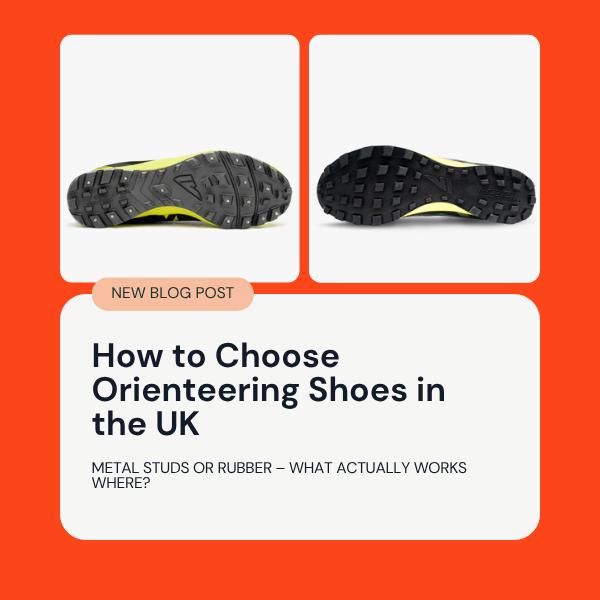
Metal Studs
Metal studs dig into the ground.
They grip well on:
- Leaf-covered forest
- Soft woodland soil
- Wet grass slopes
- Roots
- Fallen wood
Even when the forest looks dry, there’s often loose leaves
or soft ground underneath. That layer can move. That’s where metal studs help.
They give you a more secure feeling when:
- Running across slopes
- Pushing off on uneven ground
- Descending through forest
That’s why, in UK forest racing, most serious runners choose metal studs.
Not because of snow.
Not because it sounds tougher.
Because they feel more secure in proper forest terrain.
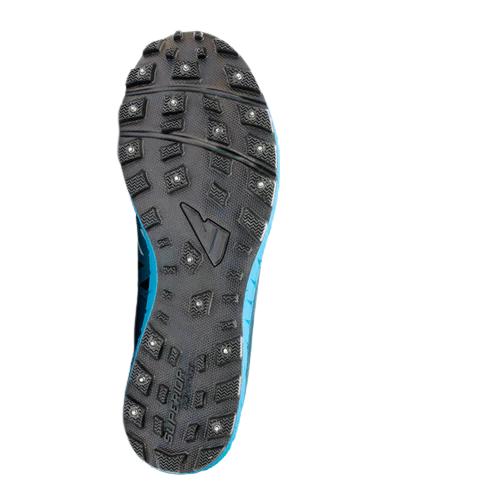
Rubber Grip (Non-Metal Studded Shoes)
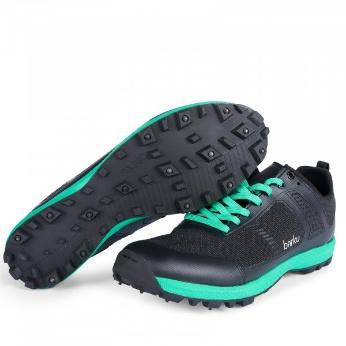
Rubber shoes rely on deep lugs and sticky rubber.
They work well when:
- You’re on mixed terrain
- There’s gravel or firmer ground
- The forest isn’t very technical
- The terrain includes rock
On rock, metal doesn’t grip well. It can’t bite into hard stone.
Rubber has more contact with the surface, so it’s more stable there.
Rubber is also common for:
- Training
- Less technical events
- Runners who don’t want metal studs
It’s not better or worse.
It depends on the ground.
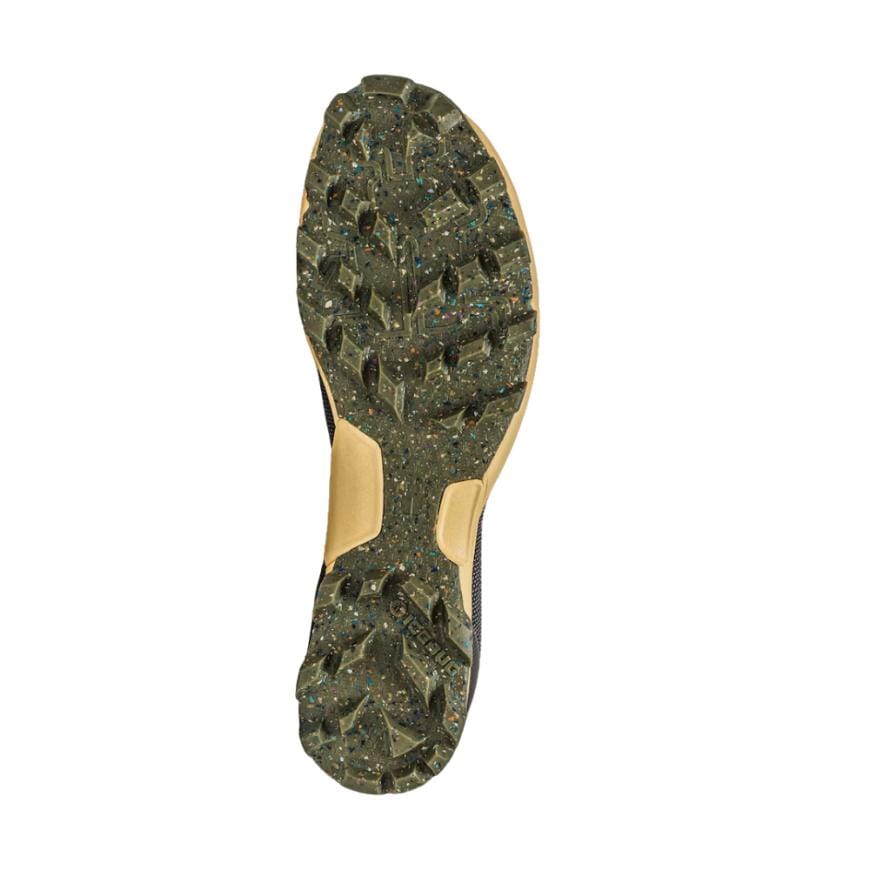
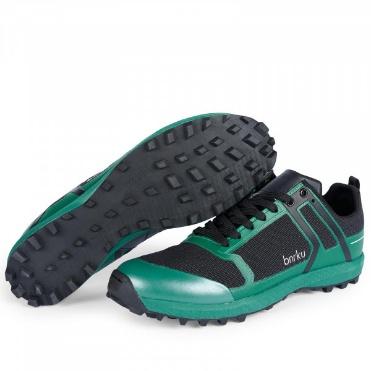
You can see examples of both types in our metal stud orienteering shoes and rubber grip
orienteering shoes categories.
Lug Depth – Something People Overlook
Not all rubber shoes are the same.
Some have deeper lugs. Some are shallower.
Deeper lugs:
- Handle soft mud better
- Clear mud more easily
Shallower lugs:
- Feel more stable on firmer ground
- Wear more slowly on hard surfaces
So even within “rubber,” there are differences.
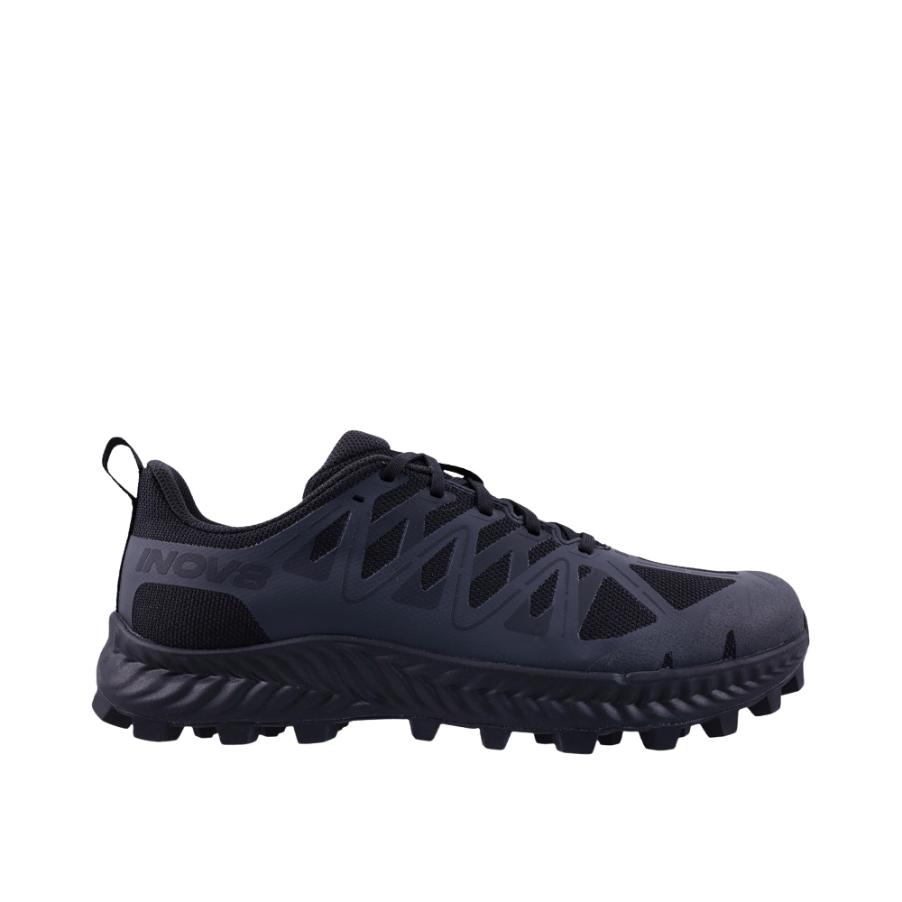
UK Terrain – What Usually Makes the Decision
Let’s make this simple.
Proper Forest Racing
Typical UK forest includes:
- Leaves
- Roots
- Mud under the surface
- Slopes
- Fallen wood
Even when it’s dry, it’s rarely solid.
For racing in these conditions:
→ Most runners go for metal studs.
Rubber can work, especially for training.
But for racing, metal usually feels more secure.
Slope and mulch
Grassy slopes can be surprisingly slippery.
Metal studs:
- Grip into the ground
- Help when braking downhill
- Feel safer across a slope
Rubber:
- Can struggle if the grass is greasy
- Depends a lot on how deep the lugs are
Rocky Fell
Here rubber makes more sense.
Metal doesn’t grip well on hard rock.
Rubber gives more contact and feels more stable.
If your terrain is rocky and firm:
→ Rubber is usually the better choice.
Sprint / Park
If you’re running on:
- Pavement
- Hard paths
- Gravel
- Short grass
Metal is unnecessary and wears quickly.
Rubber is the clear choice here.
Elite vs Club Runner – Does It Matter?
Yes, a bit.
Elite runners:
- Run harder on descents
- Commit fully on slopes
- Need grip they don’t have to think about
That’s one reason metal dominates at elite forest level in the UK.
Club runners:
- May prioritise comfort
- May run mixed terrain
- May not push slopes as aggressively
But here’s the thing — confidence underfoot makes a big difference.
If you don’t trust your grip, you slow down.
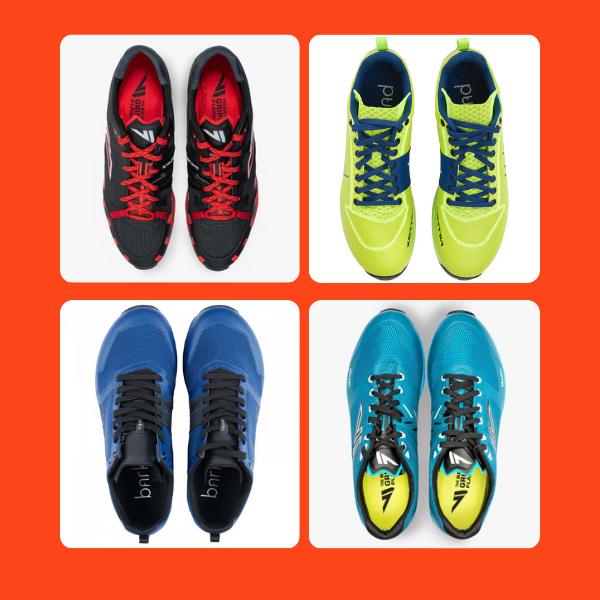
Fit Matters Just as Much as Grip
We see this all the time.
Someone changes shoe type, but the real problem is fit.
If your foot moves inside the shoe:
- You get blisters
- You lose stability
- You feel less confident
A good orienteering shoe should feel:
- Snug around the midfoot
- Secure at the heel
- With space at the toes
Toe Space
Very important to address here that your toes should not hit the front of the shoe.
Your foot slides forward slightly when you are running downhill.
If there’s no space:
- Toenails bruise
- Nails go blue
- Sometimes they come off
There must be space.
Feet Change Over Time
Feet often get wider with age.
A shoe that worked years ago might:
- Feel tight now
- Cause pressure
- Feel unstable
Sometimes the issue isn’t metal vs rubber.
It’s that your foot shape has changed.
When Should You Change Your Shoes?
Think about replacing when:
- Metal studs are worn down
- Rubber lugs are rounded off
- Grip feels less reliable
- The upper feels loose or stretched
Often you don’t notice the grip fading — until one race where you suddenly start slipping.
So… Metal or Rubber?
Ask yourself this:
- Am I racing proper off-trail forest?
- Is the ground soft, leafy and uneven?
- Is there rock involved?
- Is this sprint or park terrain?
- What level am I racing at?
Frequently Asked Questions
For UK forest racing:
→ Metal studs are usually the preferred choice.
For rocky or mixed terrain:
→ Aggressive rubber often makes more sense.
Don’t choose based on marketing.
Choose based on the ground you run.
Analyse first. Then decide.
Once you understand the differences, you can browse our full range of orienteering shoes to find the right pair for your terrain and running style.
Are metal studs better for orienteering?
Metal studs usually give better grip in typical UK forest terrain with leaves, soft ground and
slopes. That is why many competitive runners prefer them for forest racing.
Can you use rubber shoes for orienteering?
Yes. Rubber grip shoes work well for mixed terrain, rocky areas or training.